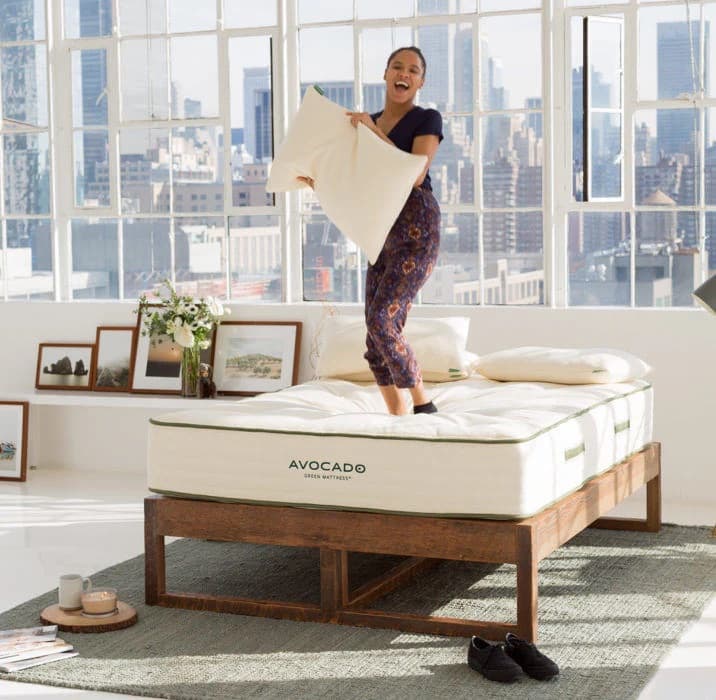
A non-toxic mattress is not a category the government recognizes, which is why the phrase has become so easy to print. Any brand can use it. Almost none of them will tell you what their fire barrier is made of, and that single question separates the beds worth buying from the ones that just market well.
Here is why it matters now. On January 1, 2027, California makes it illegal to sell a mattress containing textile fiberglass. It is the only enacted ban in the country, and because no manufacturer builds a separate bed for one state, it works as a national deadline. Every mattress brand now advertises that it is fiberglass-free. Few of them say what they use instead.
Below are nine mattresses that answer the question, with the certificates read line by line rather than counted. Prices are for a queen, rechecked on September 21, 2026.
What makes a mattress toxic
Four things, in the order they actually matter.
A fiberglass fire barrier. The federal flammability rule, 16 CFR Part 1633, is a performance standard: a mattress has to survive an open flame for a set time. It does not say how. Fiberglass became the industry answer because it is cheap and passes without chemical treatment, woven into a sock under a cover whose tag warns you not to remove it. People remove it anyway. The fibers get into the room, and California's health department puts remediation at thousands of dollars. This is the only hazard on the list that is a contamination event rather than an exposure question.
Chemical flame retardants. The alternative way to pass the burn test. Organophosphate retardants are semi-volatile, which means they migrate out of foam into household dust rather than evaporating cleanly, and they are detected broadly in biomonitoring studies. A mattress that needs no barrier at all has removed the reason for them.
Polyurethane foam. Petroleum-based, and the main source of what people call new mattress smell. New mattresses have been measured off-gassing volatile organic compounds at roughly four times the rate of used ones. Memory foam is the most chemically complex version. Plant-based foam is almost always a small percentage of soy polyol in a petroleum base.
The finishes. PFAS in waterproof and stain-resistant layers, antimicrobial treatments, solvent adhesives between layers, and plasticizers in covers. These are the quietest of the four and the closest to your skin, and they are the reason a waterproof mattress protector can undo a clean mattress underneath it.
So fiberglass-free tells you what a brand took out, and nothing about what it put in. Ask what the barrier is instead. Two answers hold up: organic wool, or no barrier at all, which a manufacturer earns by removing enough synthetics that the bed passes on its own construction.
Then read the certifications by what they cover. GOLS certifies latex and stops there, which leaves the cover, the wool, the coils, the glue and the barrier outside the certificate. A bed sold as a GOLS certified organic mattress is certified from the third layer down.
None of these mattresses carry a Toxome score, and that is on purpose. The score reads fiber composition, the right question for a shirt and the wrong one for a bed built from latex and steel. Scoring the cover fabric and calling that number a mattress score would tell you nothing. So each card below prints the certifications, and under them, the object each certification attaches to.
The 9 best non-toxic mattresses at a glance
| Mattress | Queen | Build | Flame barrier | Strongest certification | Latex-free |
|---|---|---|---|---|---|
| Avocado Green Mattress | $1,699 | Organic Dunlop latex over coils | Organic wool | GOTS on the finished mattress, CU863637 | No |
| My Green Mattress Natural Escape | $1,159 | Organic latex over coils | Organic wool | GOTS and GOLS on components | No |
| Parachute Eco Mattress | $2,650 | Steel coils, microcoils, wool, no foam or latex | Wool, no chemicals used | Wool Integrity NZ on the wool only | Yes |
| PlushBeds Botanical Bliss | $2,024 | Adjustable organic latex layers | Organic wool | GOLS, GOTS, GREENGUARD Gold | No |
| Naturepedic EOS Classic | $3,799 | Customizable latex and coil layers | Organic wool | GOTS, GOLS, MADE SAFE | No |
| Happsy Organic Mattress | $1,399 | Organic latex over coils | Organic wool | GOTS, GOLS, GREENGUARD Gold | No |
| Birch Natural Mattress | $1,865 | GOLS latex over wrapped steel coils | Not named | GREENGUARD Gold on the finished bed | No |
| Saatva Zenhaven | $3,549 | Flippable 100% natural Talalay latex | Organic wool | OEKO-TEX on the latex | No |
| Eco Terra Hybrid Latex | $709 | GOLS latex over encased coils | Organic wool | GOLS and eco-INSTITUT on the latex | No |
Nine mattresses that will tell you what is inside them, ordered by how much their certifications cover, with one exception noted where it sits: Parachute is placed by what it is built from, because it is the only bed here with no latex and no foam anywhere in it.
1. Green Mattress
Avocado

GOTS covers the finished mattress, license CU863637, the only finished-product license published by any brand on this list. OEKO-TEX Standard 100 Class I covers the whole mattress rather than the cover alone. GOLS covers the latex, RWS the wool.
Organic Dunlop latex over wrapped coils · 97% organic cotton, 3% elastane cover · Flame barrier: organic wool · $1,699 queen, from $1,999
The most thoroughly certified bed sold in America, and the only one that publishes a finished-product license number instead of asking you to infer one. Worth knowing before you buy the entry tier: the $1,699 firm has only two inches of latex over the coils, so most of what you are paying for is the spring unit. The cover is also 3% elastane, a synthetic, which the brand states rather than hides.
2. Natural Escape
My Green Mattress
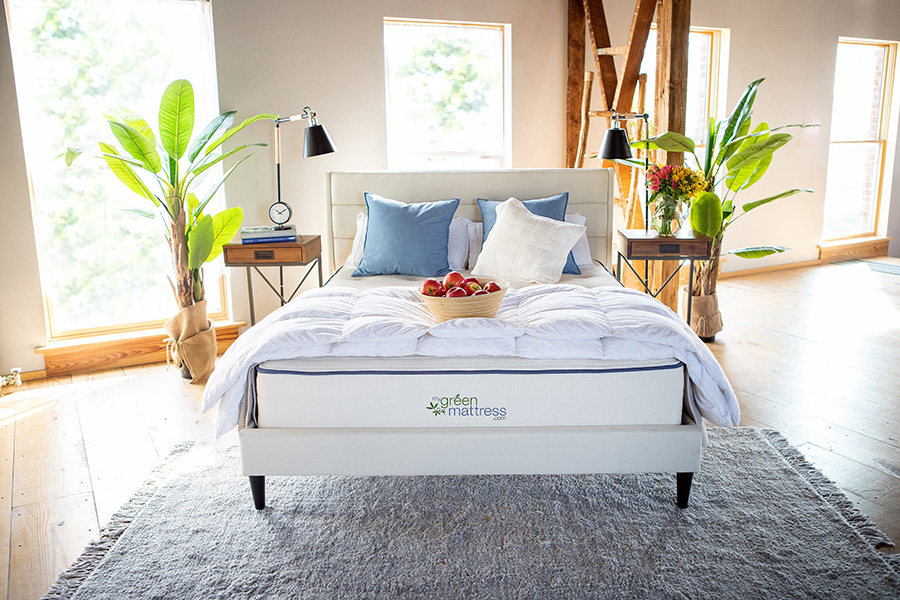
GOTS covers the cotton cover and the wool, license CU1015248. GOLS covers the latex, license CU 865932. GREENGUARD Gold covers emissions from the finished mattress. These are component licenses rather than a finished-product one, but they are published with their numbers, which almost nobody else does.
3in organic Dunlop latex over up to 1,462 pocketed coils · 100% GOTS organic cotton cover · Flame barrier: GOTS organic wool · $1,159 queen, from $1,289
The best certification per dollar on this list, and the only brand besides Avocado that prints certificate numbers where a buyer can check them. A family-run operation in Illinois that has been doing this longer than most of the venture-funded names. Nothing on the page claims more scope than it holds.
The best latex-free non-toxic mattress
Latex is how almost every clean brand avoids polyurethane foam, which leaves anyone with a latex sensitivity choosing between two things they do not want. One bed on this list solves it, and it does so by removing more than latex.
3. Eco Mattress
Parachute

The thinnest paperwork on this list, and the only bed that does not need most of it. Parachute names Wool Integrity NZ, which covers the sourcing of the wool and nothing else. There is no GOTS license, no GOLS, and no emissions certification published on the mattress page. What the brand does state plainly is the build, and the build is the argument.
Pocketed steel coils and microcoils · Pure New Zealand wool comfort and insulator layers · 100% organic cotton quilted cover · Tufted, no adhesives · Flame barrier: wool, no chemical flame retardants · $2,650 queen
The only mattress here with no latex and no foam anywhere in it, which makes it the answer for a latex allergy and for anyone who wants nothing petroleum-derived in the bed at all. It is built from three materials: steel, wool and organic cotton. The layers are tufted rather than glued, so the solvent adhesives that sit between the layers of most mattresses are absent by construction, not by certificate. Wool is naturally flame resistant, so it passes the burn test without an added barrier and without chemical retardants, and Parachute says so directly.
What you give up is documentation. Parachute publishes no finished-product license, no third-party emissions test, and no explicit fiberglass statement on the mattress page, which is a gap worth noting on a bed at this price. The construction it describes leaves no room for a fiberglass sock, but describing a build is not the same as certifying one. Buy this for what it is made of. The beds above it are better documented.
The rest of the list, ranked by certification scope
4. Botanical Bliss
PlushBeds
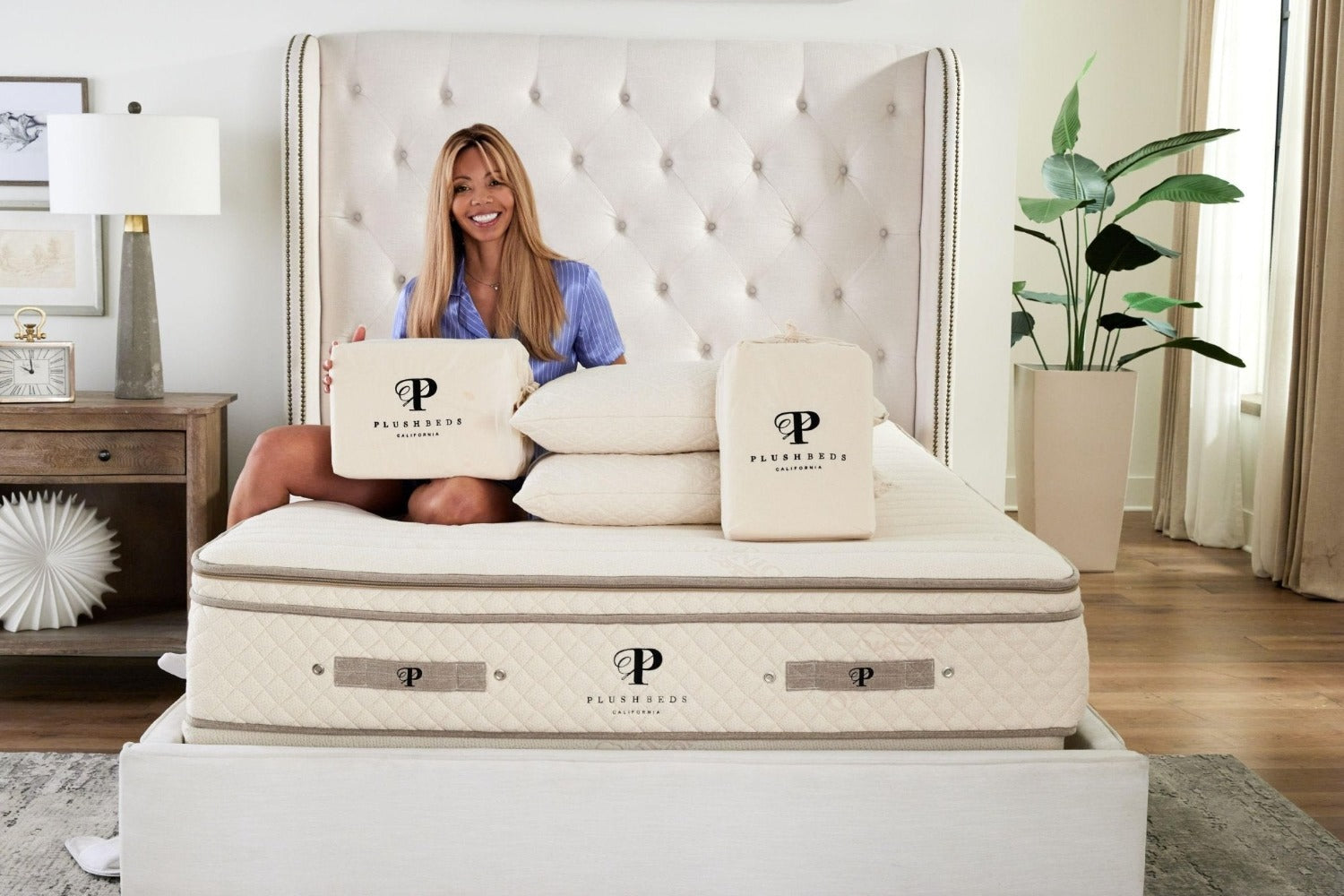
GOLS covers the latex core, GOTS the organic cotton and wool, OEKO-TEX the latex layers. eco-INSTITUT and GREENGUARD Gold both cover emissions from the finished mattress, which is a rare pairing. No certificate numbers are published.
6in GOLS Arpico latex core, 2in organic latex, 1in organic cotton cover · Wool layer · $2,024 queen, 9in medium, from $3,524
Certification breadth close to Avocado's, with two independent emissions tests rather than one. The wool is present and appears to be the flame barrier, though the product page never says so, a small honesty gap in an otherwise clean listing. Watch the price. PlushBeds runs rotating promotions deep enough that the stated regular price is close to fictional.
5. EOS Classic
Naturepedic

GOLS covers the latex. GREENGUARD Gold, UL Formaldehyde-Free and UL Non-Detectable PFAS all cover the finished mattress. Naturepedic states its mattresses meet GOTS organic standards but does not publish a finished-product license number, so read that as a conformance claim rather than a certified one.
3in organic latex over 8in glueless encased coils · Organic cotton and wool, plus a PLA comfort layer · Flame barrier: none at all · $3,799 queen
The engineering answer to the barrier problem. Naturepedic passes the federal burn test with no flame retardant chemicals and no barrier of any kind, achieved by removing enough flammable synthetics that the bed does not need one. It also holds the only non-detectable PFAS certification here. The caveat is the PLA layer, a plant-derived synthetic polymer sitting inside a bed marketed as organic, and a price roughly double similarly certified competitors.
6. Happsy Organic Mattress
Happsy

GOTS covers the cotton and wool, GOLS the latex, GREENGUARD Gold the finished mattress emissions. No certificate numbers are published, which is the one place this trails its parent brand.
GOLS organic latex over pocketed coils · GOTS organic cotton cover and wool · Flame barrier: none at all · $1,399 queen
Naturepedic's budget line, built on the same principle and roughly a third of the price. Same no-barrier construction, and the brand states that there is no polyurethane foam, no fiberglass, no formaldehyde and no glue in the bed. What you give up is choice: one ten-inch build, two firmness options, no layer customization. For a first clean mattress it is the most sensible entry point here.
7. Natural Mattress
Birch

GREENGUARD Gold covers the finished mattress for emissions, which is the strongest thing Birch holds and a real test. GOLS covers the latex. Nothing covers the cotton or the wool: there is no GOTS anywhere on the page, and no certificate numbers are published.
GOLS certified organic latex over individually wrapped steel coils · Organic cotton Euro Top cover · Natural New Zealand wool · Flame barrier: not named · $1,865 queen, frequently discounted
The clearest disclosure on the list about what is absent. Birch states in its own words that the bed is free of polyurethane foams, fiberglass, formaldehyde and pesticides, and it holds GREENGUARD Gold on the finished mattress, so the emissions claim is tested rather than asserted. For a bed at this price that is a genuinely strong position, and it is the cheapest GREENGUARD Gold bed here once the near-permanent sitewide discount is applied.
Two gaps keep it out of the top half. The cotton and the wool are sold as organic and natural with no textile certificate named anywhere, which is the component claim this article keeps warning about, printed at the same size as the certified ones. And the fire barrier is never named. The wool is almost certainly doing that job, but Birch does not say so, and a brand that will not name its barrier is asking you to assume. Ask them before you buy.
8. Zenhaven
Saatva
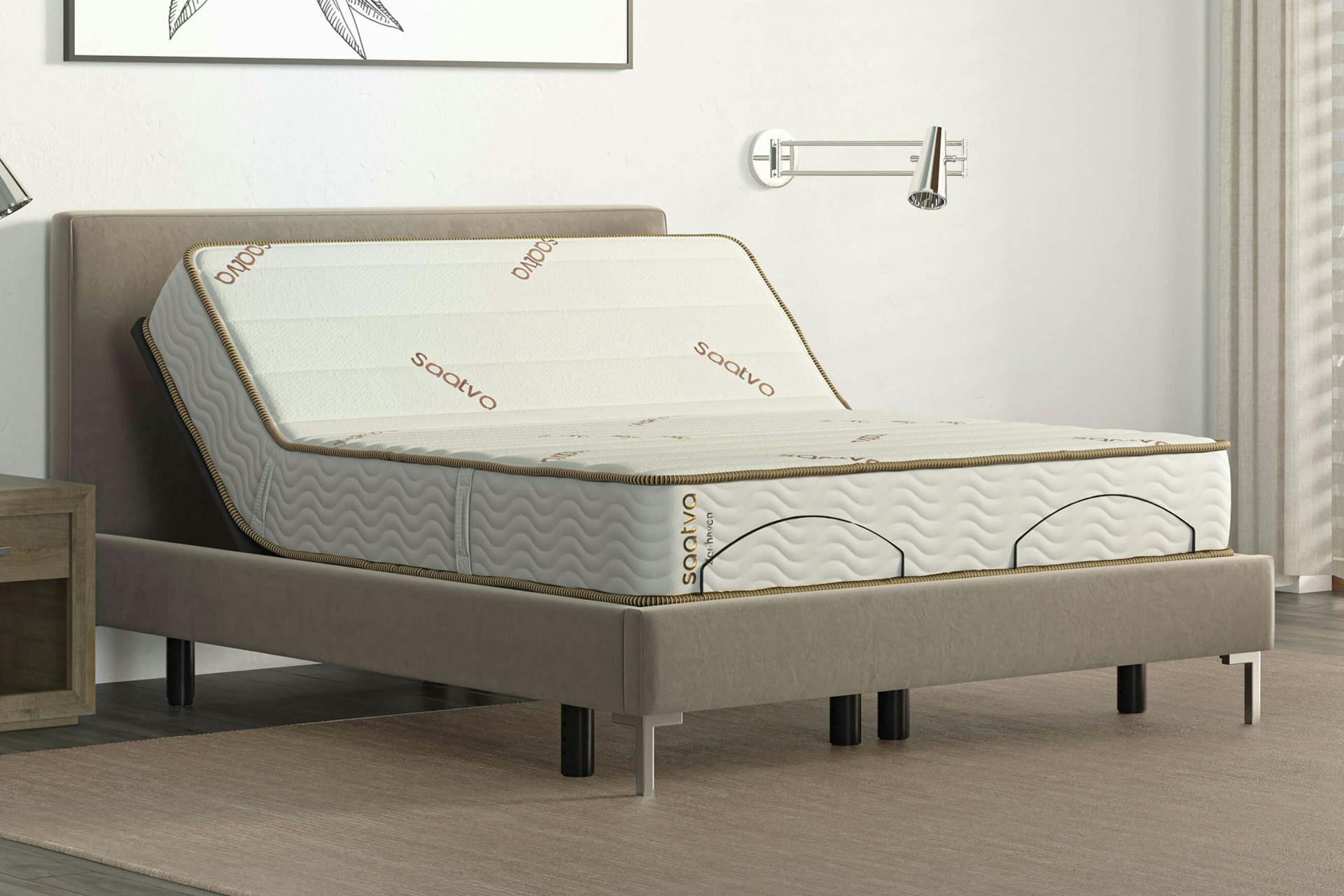
GOLS and eco-INSTITUT both cover the latex foam only. GREENGUARD Gold covers the finished mattress. GOTS covers the wool flame barrier, not the mattress and not the cover, which is described only as a blend that includes organic cotton, with no percentage given.
5-zone GOLS organic latex, no coils · Organic cotton blend cover · Flame barrier: GOTS organic New Zealand wool · $3,549 queen
A clean bed with one asterisk: the spec does not generalize across the brand. Only the latex models get the organic wool barrier. Saatva's Classic, HD and Youth use a wood-pulp barrier bonded with polyester, and the Solaire uses a rayon and polyester blend. If you walk into this brand through any other product you are buying something different. Note also that the cover here is an undisclosed blend rather than certified cotton.
9. Hybrid Latex Mattress
Eco Terra

GOLS and eco-INSTITUT both cover the latex. GOTS covers the cotton cover and the wool layer separately. There is no GREENGUARD Gold and no certificate numbers are published anywhere, so every claim here rests on the brand's word.
GOLS single-origin Arpico latex over encased Quantum coils · GOTS organic cotton cover · Flame barrier: organic wool · $709 queen, from $1,209
The cheapest real GOLS latex bed found anywhere, at roughly a third of what the most certified names charge, with a named wool barrier and single-origin latex that is not blended with synthetic rubber. What you trade for that price is verification: no published certificate numbers, no emissions testing, and an OEKO-TEX mention with no class or scope attached to it. Strong materials, with less documentation standing behind them than anything above.
Where a certification stops
The mattresses that did not make this list carry real certifications pointed at something smaller than the bed. That is a harder thing to spot, so here is what it looks like.
A certification on the factory. One brand's page states that it holds a GOLS certified facility, able to manufacture organic finished goods. Read it twice. A certified factory capable of making organic products is not a statement that the product in your cart is one. The certificate is real. The object it describes is a building.
A certification on the glue. The same page advertises a GREENGUARD Gold certified adhesive. The adhesive is a rounding error by weight in a mattress. At a glance the badge reads as though the bed was tested. It was not.
A certification on one layer. The most common version, and the most reasonable-looking. GOLS on the latex, then paragraphs about an organic mattress. The cover, the wool, the coils, and the barrier are all outside the certificate. It is a true statement about the third layer down, printed at a size that suggests it covers everything.
A barrier described but never named. Several beds in the wider market disclose a dedicated fire-barrier layer, confirm it is fiberglass-free, and never say what it is. One describes its barrier as made from natural or silica-based materials, which is the phrasing the industry uses for the fiberglass family. If a brand will not name the barrier, treat that as the answer.
The test that cuts through all four: for every badge on the page, ask what object it attaches to. Then ask whether that object is the mattress. If the brand publishes a certificate number, it is telling you it expects the question. Two brands on this list do.
How to choose a mattress, the non-toxic way
Most mattress buying guides start with firmness. Start here instead, because firmness is a preference you can return a bed over and materials are not. Eight questions, in the order worth asking them. Most of the decision is made by the first two.
Ask what the fire barrier is made of. In writing, and read the reply for a noun. Organic wool is an answer. Natural or silica-based is the phrasing the industry uses for the fiberglass family. Silence is also an answer.
Ask what the mattress is built from, layer by layer. A brand that will not list its layers is asking you to buy a marketing claim. Latex, wool, organic cotton and steel are the whole vocabulary of a clean bed. Polyurethane foam, whatever it is called on the page, is the thing most of these mattresses exist to replace.
Read each certificate for its object, not its logo. GOLS attaches to latex. GOTS can attach to cotton, to wool, to a factory, or to a finished mattress, and those are four different claims printed at the same size. GREENGUARD Gold attaches to emissions and says nothing about materials. CertiPUR-US attaches to polyurethane foam and mostly confirms the absence of things already out of use.
Skip the waterproof protector. It is the cheapest mistake in the category and it sits closer to you than the mattress does. Stain-resistant and waterproof finishes are where PFAS live in bedding, and several states now restrict them: Maine's ban on intentionally added PFAS in textiles including bedding took effect January 1, 2026, and Washington restricted PFAS in indoor textile furnishings on the same date. Use wool or tightly woven organic cotton instead.
Decide whether you need latex at all. If you have a latex sensitivity, the list of genuinely clean options narrows to beds built from coils, wool and cotton. There is one on this list.
Then pick firmness by how you sleep. This is where every other guide starts, and it matters, it just matters second. Side sleepers generally want softer, so the shoulder and hip can sink and the spine stays straight. Back and stomach sleepers generally want firmer, so the hips do not drop. Heavier sleepers want firmer than the label suggests, because a medium reads soft under more weight. Latex beds run firmer and more responsive than foam at the same stated firmness, which surprises people coming off memory foam.
Use the trial, and use all of it. Most of these brands give 90 to 365 nights. A new mattress takes two to four weeks to stop feeling wrong, because your body is unlearning the shape of the old one, so judging it in week one tells you very little. Note the return shipping terms before you buy: on a bed this heavy, "free returns" and "free trial" are not the same sentence.
If you are keeping a conventional mattress, the useful moves are unglamorous: air it out in a ventilated room before you sleep on it, vacuum the bedroom with a HEPA filter regularly because semi-volatile retardants concentrate in dust rather than in the air, and never unzip the cover.
Frequently asked
On documentation, the Avocado Green Mattress. It is the only bed on this list that publishes a finished-product GOTS license number, CU863637, rather than certifying the cotton and then writing about the mattress. If you want a bed with no latex and no foam at all, the Parachute Eco Mattress is the only one here built entirely from wool, organic cotton and steel. If you want certified organic latex for the least money, Eco Terra at $709 is the cheapest real GOLS bed we found anywhere.
Four things, in the order they matter. A fiberglass fire barrier, which contaminates a room if the cover ever comes off. Chemical flame retardants, which are semi-volatile and migrate out of foam into household dust rather than evaporating cleanly. Polyurethane foam, which off-gasses volatile organic compounds fastest when the mattress is new. And the finishes: PFAS in waterproof and stain-resistant layers, antimicrobial treatments, and solvent adhesives between layers. A bed that removes all four is what this list is looking for.
Yes, but they are rare, because latex is how most clean brands avoid foam. The Parachute Eco Mattress is the clearest example here: pocketed steel coils and microcoils, New Zealand wool, and a 100% organic cotton cover, tufted rather than glued, with no latex, no foam and no adhesives anywhere in the build. If you have a latex sensitivity, that construction is the one to look for.
Ask the brand what the fire barrier is made of, in writing, and read the answer for a noun. A brand that names organic wool is telling you. A brand that says its barrier is natural or silica-based is using the phrasing the industry uses for the fiberglass family. A zippered cover with a tag warning you not to remove it is the strongest physical signal, because that sock is usually what the warning is protecting. No answer is an answer.
Because the federal flammability rule is a performance test, not a materials rule. A mattress has to survive an open flame, and the regulation does not say how. Fiberglass passes cheaply and without chemical treatment, so it became the default barrier in budget beds. California has now banned it in mattresses sold in the state from January 1, 2027, which is why so many brands started advertising fiberglass-free in the last two years.
No. GOLS certifies the latex and only the latex. It requires at least 95% certified organic natural rubber by polymer weight and caps the processing chemicals, and it says nothing about your cover, your wool, your coils, your adhesives, or your flame barrier. A bed whose only certification is GOLS is certified from the third layer down.
A component claim and a finished-product license are not the same thing. Most brands certify the cotton, then write about the mattress. Very few hold a license on the assembled bed. If a brand has one, it will publish the number, because the number is the whole point of having it.
It means the finished product was tested in an environmental chamber against emissions limits for hundreds of volatile organic compounds. It is an air-quality test, not a materials audit, and a polyurethane foam mattress can hold the certification. It is worth having. It is not a verdict on what the bed is made of.
It is the weakest badge in the category. CertiPUR-US is an industry program that certifies polyurethane foam, and what it mostly confirms is the absence of substances that are already restricted or out of use. It is a floor presented as a seal. No mattress on this list needs it, because none of them are built from polyurethane foam.
Most of the volatile organic compounds leave in the first few weeks, and measurable emissions can continue for months. New mattresses have been measured emitting VOCs at roughly four times the rate of used ones. The beds on this list are built without polyurethane foam or solvent adhesives, which is where the bulk of those emissions come from, so there is far less to release in the first place.
Work in this order. First, ask what the fire barrier is made of and read the answer for a noun. Second, ask for the layers by material, because a brand that will not list them is selling you a claim. Third, read each certificate for the object it attaches to rather than counting logos. Only then pick firmness by sleep position: softer for side sleepers, firmer for back and stomach sleepers, firmer than the label suggests if you are heavier. Firmness is the part you can return a bed over. Materials are the part you cannot.
Yes. The rule is about passing the burn test, not about carrying a barrier. Remove enough of the fast-burning synthetics and a bed can pass on its own construction. Several of the mattresses here do exactly that and use no added barrier of any kind, relying on wool that is naturally flame resistant.
No, and that is deliberate. The Toxome score reads fiber composition, which is the right question for something you wear and the wrong one for something built from latex, coils, and a flame barrier. Scoring the cover fabric and calling it a mattress score would tell you nothing. So these are sorted by what their certifications cover, with the scope of each one printed on the card.


